
Emotional support animal Chicago rules: what Illinois, Cook County and the city add for your apartment
Chicago renters get the most help from Illinois law, which spells out what a landlord may ask for and bans pet fees for assistance animals. Here is how it fits with the city and county ordinances, the CHA and the RLTO deposit rules.
Yes. An emotional support animal in Chicago is still protected in housing after HUD's 2026 change, mainly because of Illinois law. The state's Assistance Animal Integrity Act, in force since January 1, 2020, covers emotional support animals that qualify as a reasonable accommodation under the federal Fair Housing Act or the Illinois Human Rights Act, and HUD's May 2026 memo changed neither law. The Act limits what a Chicago landlord can ask for, rules out certificates issued without a meaningful assessment, and bars pet deposits, pet fees and special liability insurance for an approved assistance animal.
The city and the county add places to complain more than new animal rules. The Chicago Fair Housing Ordinance bans housing discrimination based on disability, and the Chicago Commission on Human Relations takes complaints within 365 days. Cook County's Human Rights Ordinance does the same countywide, with a 180 day deadline.
For an ESA letter in Chicago, Illinois asks for three things when your disability is not obvious: documentation in writing, from someone with a therapeutic relationship with you, that describes your disability related need for the animal. No diagnosis is required, and a landlord cannot turn you down just because you skipped its own form.
Last checked October 21, 2026.
Chicago emotional support animal laws: four layers on one lease
A Chicago apartment sits under four sets of fair housing law at once, each with its own office and its own clock. Cook County's comparison of where to file housing complaints, updated in June 2026, lists disability as a protected basis at every level.
| Layer | Law | Where to file | Deadline |
|---|---|---|---|
| City | Chicago Fair Housing Ordinance | Chicago Commission on Human Relations | 365 days |
| County | Cook County Human Rights Ordinance | Cook County Commission on Human Rights | 180 days |
| State | Illinois Human Rights Act and Assistance Animal Integrity Act | Illinois Department of Human Rights | 1 year |
| Federal | Fair Housing Act | HUD, or a private lawsuit | 1 year at HUD; generally 2 years in court |
For an untrained emotional support animal, the state layer does most of the work. HUD's May 22, 2026 memo said HUD's fair housing office will find cause on a refused pet policy waiver only where the animal is individually trained to do disability related work or tasks, but private Fair Housing Act lawsuits remain available and Illinois law did not move. Our Illinois ESA letter page covers renters outside the city too.
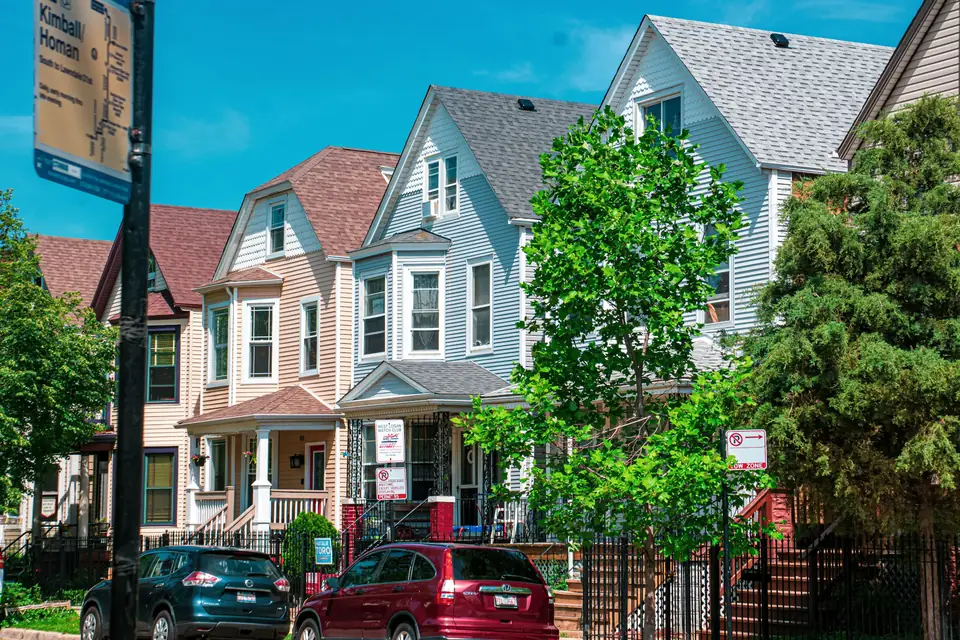
One Chicago detail matters: who owns the building. Two flats and three flats with the owner downstairs are common in Pilsen, Logan Square and Bridgeport, and small owner occupied buildings are where exemptions show up. The Fair Housing Act exempts some owner occupied buildings with four or fewer units, the Illinois Department of Human Rights says some very small properties where the owner lives may be exempt from certain provisions, and the city's tenant ordinance skips owner occupied buildings with six or fewer units. If your landlord lives in the building, get advice before you assume either way.
What the Illinois Assistance Animal Integrity Act says
The Assistance Animal Integrity Act, 310 ILCS 120, is short, and most of it is about documentation. It defines an assistance animal as an emotional support or service animal that qualifies as a reasonable accommodation under the Fair Housing Act or the Illinois Human Rights Act, and it applies to owners, property managers, condominium boards and associations, cooperatives and government entities.
Under section 10 of the Act, a Chicago housing provider:
- Asks only when needed. It may request documentation only when your disability or your need for the animal is not readily apparent or already known.
- Can offer a form, not require one. It may ask you to use a standardized form, but cannot deny your request because you did not use it, if your documentation meets the Act's requirements.
- Looks at each animal. For more than one animal, it may ask for documentation of the need for each, unless that need is apparent.
- Cannot require a diagnosis. Nothing in the Act requires documentation of a specific diagnosis.
- Cannot refuse over a neighbor alone. It may weigh another resident's documented disability related needs, such as a serious allergy, but cannot deny your animal solely because of them.
- Can check that your letter is real. Verifying the authenticity of your documentation is allowed.
The Act also lists when a request can be denied or an approval taken back: an undue financial and administrative burden, a fundamental change to the provider's operations, or reliable objective evidence, after an individualized assessment, that your specific animal poses a direct threat to the health or safety of others or causes substantial physical damage to their property that no other reasonable accommodation can reduce or eliminate, or has a pattern of uncontrolled behavior you have not taken effective action to correct.
Condominium boards and associations are named in the Act, so the same rules reach Chicago condo buildings; our guide to ESAs with HOAs and condo boards covers board disputes.
What an ESA letter in Chicago needs
Illinois spells out what counts. Documentation must be in writing, come from a person with whom you have a therapeutic relationship, and describe your disability related need for the animal. That relationship means care given in good faith, with actual knowledge of your disability and need, by a physician or other medical professional, a mental health service provider, or a reliable third party in a position to know.
The Act also says what does not count: an entity that issues a certificate or similar document without a meaningful assessment. A registration number, an ID card or a vest adds nothing, and our guide to the ESA registration myth explains why. Our guide on how to register an ESA walks through what actually takes its place.
A strong letter shows the professional's name, license type, license number, licensing state, issue date and signature, says that you have a disability related need for the animal without naming a diagnosis, and names the animal. You can see the layout on our sample letter. If your building sends its own form, our guide to the landlord ESA verification form shows how to handle it.
Illinois has no waiting period. With FetchMyESA, a professional licensed in Illinois reviews your free assessment and decides whether a letter is appropriate. Most letters are issued within 1 to 2 business days after the evaluation is complete, at $99 for one animal, with a full refund if no letter is issued.
Emotional support animal Chicago apartment costs: fees, deposits and damage
The money rule comes from the state, not the city. Under 310 ILCS 120/10(f), a housing provider may not require a resident to pay a pet deposit, pet fee or related pet assessment for an assistance animal, even if the building allows pets and charges pet owners those costs, and it may not require special liability insurance for the animal. What it may do is charge for repairs to your unit or the common areas, reasonable wear and tear excepted, the same way it would charge any other resident.
| Charge | For an approved assistance animal in Illinois? |
|---|---|
| Monthly pet rent, pet fee or other pet assessment | Not allowed |
| Pet deposit | Not allowed |
| Special liability insurance for the animal | Not allowed |
| Repairs for damage beyond reasonable wear and tear | Allowed, as for any resident |
| Your ordinary security deposit | Same rules as for every tenant, below |
Chicago's Residential Landlord and Tenant Ordinance, the RLTO, sets the general security deposit rules for most city rentals. According to the city's summary, a landlord holding a deposit must:
- give you a receipt, which can be electronic if you paid electronically
- keep it in a federally insured, interest bearing account at an Illinois financial institution, apart from the landlord's own money, and name that institution in writing within 14 days
- pay interest every year on a deposit held more than six months
- within 30 days after you move out, give you an itemized statement of any damage with repair costs
- return the deposit, minus proper deductions, within 45 days after you move out
A landlord who does not follow these rules can owe two times the deposit plus interest. The RLTO skips owner occupied buildings with six or fewer units, landlords must attach the city's summary to every written lease and renewal, and the city's RLTO page lists the other exclusions. These are general rules for every tenant; for how a specific charge in your lease fits with them, ask a tenant lawyer or legal aid group. Our guide to ESA pet fees and deposits covers other states.
City of Chicago emotional support animal complaints: the Commission on Human Relations
The Chicago Fair Housing Ordinance bans housing discrimination based on disability, source of income and a dozen other characteristics. The Chicago Commission on Human Relations enforces it. For incidents on or after January 23, 2019, the discrimination must have happened in Chicago and the complaint must be filed within 365 days.
Commission staff can answer questions and help you draft the complaint. The Commission then notifies the landlord, investigates, and decides whether there is substantial evidence of a violation; if so, the case goes to an administrative hearing. The parties can settle at any point.
Keep your expectations of the city layer realistic: in its common questions on disability discrimination, the Commission says the Chicago Human Rights Ordinance and its regulations do not define the term service animal, and that it looks to state and federal law for guidance. We found no separate city rule on emotional support animals in housing. The Illinois Act tells you what documentation is fair; the city ordinance gives you a local office for a disability discrimination complaint.
In Chicago, the state statute sets the rules, and the city and county give you somewhere close to home to enforce them.
Cook County's Human Rights Ordinance and Commission
The Cook County Human Rights Ordinance protects people throughout the county from housing discrimination, including discrimination based on disability, and the Cook County Commission on Human Rights enforces it. A complaint must be filed within 180 days of the alleged violation, filing is free, and complaint forms come in Spanish, Polish and several other languages.
Inside Chicago, the county office is a second option rather than the first stop. The county says that when a protection applies both in Cook County and in the City of Chicago, your complaint may belong with a City of Chicago agency, and it strongly recommends asking the Commission about jurisdiction before you file. In suburban Cook County, in Cicero or Berwyn for example, the county commission covers your building alongside the state. Its 180 days is the shortest deadline of the four, so do not let it run out while you decide.
Chicago Housing Authority: emotional support animals in public housing
In CHA public housing, you make the request to CHA itself. On its page for residents with disabilities, the Chicago Housing Authority lists approval of a service or emotional support animal as an example of a reasonable accommodation. Requests go through CHA's online reasonable accommodation portal, and CHA reviews each one, asks for more information if needed, and sends a decision letter.
Expect CHA's own paperwork rather than only your letter: the portal says each knowledgeable professional who verifies a disability completes a certification of need. CHA also has a grievance procedure for reasonable accommodation decisions. And under 24 CFR 960.705, a housing authority may not apply or enforce its pet policies against an animal needed as a reasonable accommodation.
A Housing Choice Voucher works differently. With a voucher and a private landlord, the landlord decides under the Fair Housing Act, the Illinois Human Rights Act and the Assistance Animal Integrity Act, and the city ordinance separately bars discrimination based on source of income. Our guide to ESAs in public housing and Section 8 covers both.
If your Chicago landlord says no: where to file
Ask for the answer in writing, and keep dated copies of your request, your letter and every reply. Then choose a forum:
- Chicago Commission on Human Relations. Housing in the city, within 365 days. Staff can help draft the complaint.
- Cook County Commission on Human Rights. Housing anywhere in Cook County, within 180 days. In Chicago, ask about jurisdiction first.
- Illinois Department of Human Rights. Claims under the Illinois Human Rights Act statewide. For housing, the Department says to file within one year of the discrimination; filing is free and you do not need a lawyer.
- HUD. Federal Fair Housing Act complaints, within one year. Since May 2026, HUD's fair housing office finds cause on a refused pet policy waiver only where the animal is individually trained, so for an untrained ESA the city, county or state route is often the better fit; HUD still suits a trained psychiatric service dog.
- Court. A private Fair Housing Act lawsuit, generally within two years, which the 2026 memo did not change.
Ask the office you choose whether filing there affects your options elsewhere. Our guide on filing a fair housing complaint after an ESA denial walks through the steps.
Retaliation has its own protections. The RLTO bars a landlord from retaliating against a tenant for using a legal right or remedy, for example by threatening to end the tenancy, raising the rent, cutting services or refusing to renew, and the Fair Housing Act makes it unlawful to coerce, intimidate, threaten or interfere with anyone exercising fair housing rights. If a notice to leave follows your request, our guide on whether you can be evicted for an ESA explains your options, and LawHelp.org can point you to free legal aid.
Ready for your letter? If you rent in Chicago and your animal helps you get through the week, the free assessment is a calm first step toward a letter from a professional licensed in Illinois. Start the free assessment, or read what an ESA letter includes.
Questions people ask
Are emotional support animals protected in Chicago apartments?
Yes. The Illinois Assistance Animal Integrity Act covers emotional support animals that qualify as a reasonable accommodation under the Fair Housing Act or the Illinois Human Rights Act, and HUD's May 2026 memo changed neither law. The Chicago Fair Housing Ordinance and the Cook County Human Rights Ordinance also ban housing discrimination based on disability. A landlord can still deny a specific request in limited cases, such as a direct threat to others or an undue burden.
Can a Chicago landlord charge pet rent or a pet deposit for an ESA?
No. Under 310 ILCS 120/10, a housing provider may not require a pet deposit, pet fee or related pet assessment for an assistance animal, even in a building that charges pet owners those costs, and it may not require special liability insurance for the animal. You can still be charged for damage the animal causes beyond reasonable wear and tear, the same as any other resident.
Does the City of Chicago have its own emotional support animal law?
Not a separate one that we found. The Chicago Fair Housing Ordinance bans housing discrimination based on disability, and the Chicago Commission on Human Relations takes complaints within 365 days. The Commission says the Chicago Human Rights Ordinance and its regulations do not define the term service animal and that it looks to state and federal law for guidance. The detailed ESA rules for Chicago come from the Illinois Assistance Animal Integrity Act.
Where do I file an ESA housing complaint in Chicago?
You have four agency options, each with its own deadline: the Chicago Commission on Human Relations within 365 days, the Cook County Commission on Human Rights within 180 days, the Illinois Department of Human Rights within one year, and HUD within one year. A private Fair Housing Act lawsuit is generally possible within two years. If your housing is in Chicago, Cook County recommends asking it about jurisdiction before you file there.
Does the CHA allow emotional support animals?
Yes, as a reasonable accommodation. The Chicago Housing Authority lists approval of a service or emotional support animal among its examples of reasonable accommodations. You make the request through CHA's online reasonable accommodation portal, CHA may ask for more information, and it sends a decision letter. Federal rules also say a housing authority may not apply its pet policies to an animal needed as a reasonable accommodation.
Can my Chicago landlord make me use its own ESA form?
It can ask, but it cannot deny you only for not using it. Illinois law lets a housing provider ask you to make the request on a standardized form, but the provider cannot deny the request because you did not use the form, as long as your documentation is in writing, comes from someone with a therapeutic relationship with you and describes your disability related need for the animal.
This guide is general information, not legal or medical advice. Rules change and vary by state.
ESA rules in other cities
All of Illinois- Aurora
- Cicero
- Elgin
- Joliet
- Waukegan
- Albuquerque
- Alexandria
- Allentown
- Amarillo
- Anaheim
- Anchorage
- Ann Arbor
- Arlington
- Arlington, Virginia
- Athens
- Atlanta
- Aurora
- Austin
- Avondale
- Bakersfield
- Baltimore
- Baton Rouge
- Berkeley
- Bethlehem
- Billings
- Birmingham
- Bloomington
- Boise
- Boston
- Boulder
- Bozeman
- Bridgeport
- Brockton
- Brownsville
- Buffalo
- Burlington
- Camden
- Cape Coral
- Chandler
- Charleston, South Carolina
- Charleston, West Virginia
- Charlotte
- Cheyenne
- Chula Vista
- Cincinnati
- Cleveland
- College Station
- Colorado Springs
- Columbia
- Columbus
- Compton
- Corona
- Corpus Christi
- Dallas
- Danbury
- Dayton
- Denton
- Denver
- Des Moines
- Detroit
- Doral
- Downey
- Durham
- Edinburg
- El Monte
- El Paso
- Elizabeth
- Escondido
- Fargo
- Fayetteville
- Flagstaff
- Fontana
- Fort Collins
- Fort Lauderdale
- Fort Myers
- Fort Worth
- Fresno
- Gainesville
- Gaithersburg
- Garden Grove
- Garland
- Gilbert
- Glendale
- Grand Prairie
- Grand Rapids
- Greeley
- Greenville
- Harlingen
- Hartford
- Hayward
- Hazleton
- Hempstead
- Henderson
- Hialeah
- Hollywood
- Homestead
- Honolulu
- Houston
- Huntsville
- Hyattsville
- Indianapolis
- Indio
- Inglewood
- Iowa City
- Irving
- Jackson
- Jacksonville
- Jersey City
- Kansas City
- Kansas City, Kansas
- Killeen
- Kissimmee
- Knoxville
- Lakeland
- Lancaster
- Lancaster, Pennsylvania
- Laredo
- Las Cruces
- Las Vegas
- Lawrence
- Lexington
- Little Rock
- Long Beach
- Los Angeles
- Louisville
- Lowell
- Lubbock
- Lynn
- Madison
- Manassas
- Manchester
- McAllen
- McKinney
- Memphis
- Mesa
- Mesquite
- Miami
- Milwaukee
- Minneapolis
- Miramar
- Mission
- Missoula
- Modesto
- Moreno Valley
- Nashville
- New Britain
- New Brunswick
- New Haven
- New Orleans
- New Rochelle
- New York City
- Newark
- Newburgh
- North Las Vegas
- Norwalk
- Oakland
- Oceanside
- Odessa
- Ogden
- Oklahoma City
- Omaha
- Ontario
- Orlando
- Oxnard
- Palmdale
- Pasadena
- Pasco
- Passaic
- Paterson
- Pembroke Pines
- Perris
- Perth Amboy
- Pharr
- Philadelphia
- Phoenix
- Pittsburgh
- Plano
- Pomona
- Port St. Lucie
- Portland
- Portland, Maine
- Providence
- Pueblo
- Raleigh
- Reading
- Reno
- Rialto
- Richmond
- Riverside
- Rochester
- Round Rock
- Sacramento
- Salem
- Salinas
- Salt Lake City
- San Antonio
- San Bernardino
- San Diego
- San Francisco
- San Jose
- San Marcos
- Santa Ana
- Santa Clarita
- Santa Fe
- Santa Maria
- Santa Rosa
- Savannah
- Seattle
- Shreveport
- Silver Spring
- Sioux Falls
- South Gate
- Springdale
- Springfield
- St. Louis
- Stamford
- Stockton
- Tacoma
- Tallahassee
- Tampa
- Tempe
- Thornton
- Toledo
- Trenton
- Tucson
- Tulsa
- Union City
- Victorville
- Vineland
- Virginia Beach
- Visalia
- Waco
- Waterbury
- West Palm Beach
- West Valley City
- White Plains
- Wichita
- Wilmington
- Worcester
- Yakima
- Yonkers
- Yuma