
Emotional support cats: how the letter works for cats
Most ESA advice is written with dogs in mind. Here is how the rules apply when your support animal purrs instead of barks.
Yes, a cat can be an emotional support animal. Fair housing law has never limited reasonable accommodations to dogs, and several state laws define an assistance animal by what it does, providing emotional support that eases a symptom of a disability, rather than by species. A cat that helps with your mental health can be named in the same kind of ESA letter as a dog.
What a cat can't be is a service animal under the Americans with Disabilities Act, which covers only dogs, plus miniature horses under a separate rule. So an emotional support cat's rights are about housing: living with you in a building that otherwise bans pets, often without pet fees. They don't extend to stores, restaurants or airplane cabins.
There's one 2026 wrinkle. HUD's civil rights office now limits its federal enforcement to animals trained to assist with a disability, and cats are rarely task trained. For a cat, your strongest protection usually comes from your state's fair housing law and from the right to bring a private lawsuit under the Fair Housing Act.
Cats count under fair housing rules
The Fair Housing Act requires landlords to make reasonable accommodations in their rules when a person with a disability needs them to use and enjoy a home. Nothing in that duty names a species. A no pets clause is a rule like any other, and asking to keep your cat despite it is a textbook accommodation request.
State laws often say so more directly. Hawaii's fair housing law defines an assistance animal to include one that provides emotional support, trained or untrained, and says it isn't limited to dogs. Wisconsin, Virginia, Kentucky and Illinois also write emotional support animals into their statutes. After HUD's 2026 change, California and Maryland issued guidance saying emotional support animals stay protected under their state laws, and state and local fair housing laws elsewhere still apply. You can check your state on our state pages.
A cat cannot be a service animal under the ADA, which covers dogs. Our guide on whether cats can be service animals explains where that line sits.
How a cat actually helps
Cats help in quiet, steady ways. A cat that wants breakfast at seven gives shape to mornings that depression tends to flatten. A warm weight on your lap and the rhythm of purring can pull your attention back into your body during anxiety. For people who live alone, a cat's presence makes an apartment feel less empty at night.
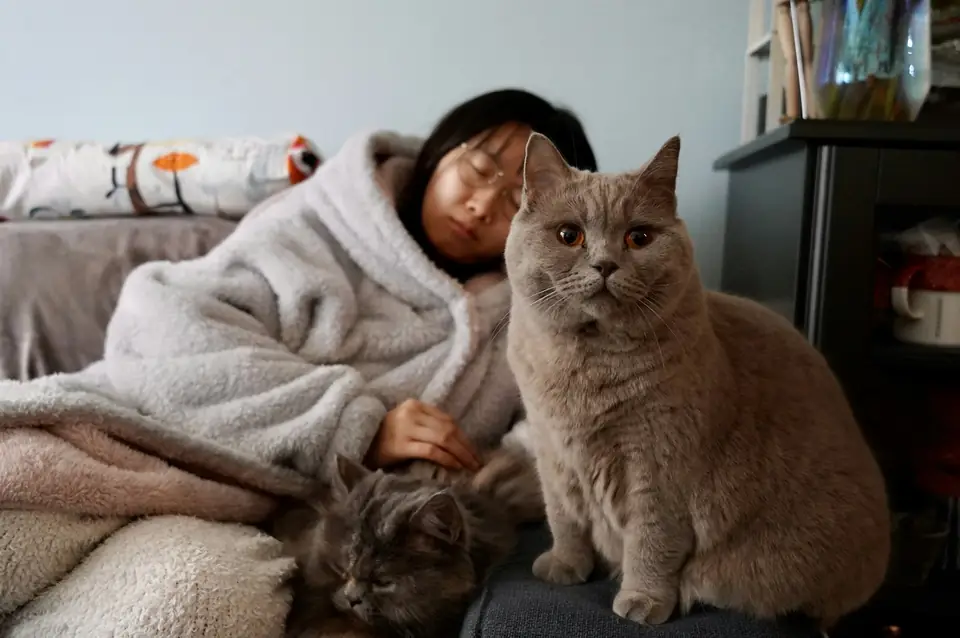
Cats also suit apartment life. They're quiet, they don't need walks at fixed hours, and their care is manageable on days when your energy is low. Those qualities matter when your symptoms rise and fall, and they're part of why a cat can be a practical support rather than one more obligation.
None of this replaces treatment. An emotional support animal works alongside care, not instead of it, and a licensed professional decides whether a letter is appropriate based on your situation, not on how much you love your cat.
What a professional looks for is the link between the animal and your symptoms. It helps to be specific about what your cat changes: you eat at regular times because she does, you sleep through more of the night with her nearby, or a panic spike passes faster with her on your chest. Concrete details like these carry more weight than a general statement that your cat makes you feel better.
A cat doesn't need to learn a trick to help. Being there, every day, is the point.
What the letter should say for a cat
An ESA letter for a cat looks like any other ESA letter. It shows the professional's name, license type, license number and licensing state, the issue date and a signature. It states that you have a disability related need for the animal without naming a diagnosis, and it identifies the cat, typically by name and species, such as a domestic shorthair named Pepper. Our sample letter shows the layout.
California needs a special note. Its law on ESA documentation, AB 468, now Health and Safety Code 122317 to 122319.5, is written about emotional support dogs. It requires an active license listed on the letter, a license where the documentation is provided, a client relationship of at least 30 days and a clinical evaluation. FetchMyESA applies that same standard to every California ESA letter, cats included, so a California letter for your cat takes at least 30 days. Housing protection itself comes from the state's fair housing law, enforced by the Civil Rights Department. Details are on our California page.
Arkansas, Louisiana and Montana also require a client relationship of at least 30 days before an ESA letter is issued, Iowa letters must say whether one existed, and Colorado has its own rules for professionals who make an ESA finding. Everywhere else, most letters are issued within 1 to 2 business days after the evaluation is complete.
Two cats, three cats, or more
Cats often come in pairs, and that's fine as long as each animal relates to your disability related need. One letter can name all of them. At FetchMyESA, a single letter naming two or three animals costs $129, compared with $99 for one.
Beyond three, expect closer scrutiny. A landlord can weigh whether a request is reasonable for the space, and HUD's 2026 memo pointed to a dismissed complaint involving dozens of animals claimed as emotional support animals. Montana's statute also allows landlords to request separate paperwork for each animal. Our guide on having more than one ESA covers how professionals and landlords think about larger numbers.
Litter, scratching and damage: what's on you
An approved emotional support cat isn't exempt from the ordinary duties of a tenant. You're responsible for keeping the unit clean and for any damage your cat causes beyond normal wear and tear, and statutes in states such as Indiana, Maine, Wisconsin and Wyoming say so expressly. Here's where cat owners most often run into trouble, and how to stay ahead of it.
| Issue | What a landlord can expect | What helps |
|---|---|---|
| Litter and odor | A clean unit and no smell in shared hallways | Daily scooping, a full change every week, and a mat under the box |
| Scratching | No damage to doors, trim, blinds or carpet | Scratching posts near favorite spots and regularly trimmed nails |
| Accidents | Carpets and floors returned in good condition | Enzyme cleaner right away, and a vet check if accidents start suddenly |
| Roaming | The cat stays inside your unit and doesn't bother neighbors | Screened windows and a closed door during deliveries |
| Records | Compliance with state and local animal rules | The rabies certificate and any city license kept on file |
Vaccines, licensing and building rules
Some state laws let landlords ask for proof that an assistance animal is vaccinated and licensed as local rules require; Florida and Montana both do. Many states and cities require rabies vaccination for cats, and some cities also license them. Having those records ready makes approval faster.
Neutral building rules still apply to your cat, such as keeping animals out of the pool area or carried through shared hallways. Whether the landlord can charge pet rent or a pet deposit depends heavily on your state. Our guide to ESA pet fees and deposits lists the states with clear rules.
Asking your landlord about your cat
Send the letter by email with a short request for an exception to the pet policy, naming your cat and asking for a written decision. Mention that you'll keep vaccinations current and take responsibility for any damage, which addresses the usual worries about cats before anyone raises them. Our guide on giving your landlord an ESA letter includes a sample email written for a cat.
Some landlord forms assume every animal is a dog and ask for breed, weight or leash details. Fill in what applies to a cat, such as breed or coat type, approximate weight and whether she stays indoors, and leave the rest blank rather than guessing. A short note that the animal is an indoor cat answers most of those questions at once.
Already living with a cat in a no pets unit? Make the request now, in writing, rather than waiting to be discovered. Be straightforward about the timing. The landlord should still consider the accommodation on its merits, although an earlier lease violation can be raised as a separate issue, so the sooner you regularize things, the better.
If you're planning to adopt, ask before the cat comes home rather than after. A request for an animal that isn't living with you yet is just as valid, and it keeps you clear of a lease violation while the landlord decides.
If you don't have a letter yet, the free assessment is the first step. You pay only if you continue, and you get a full refund if the professional doesn't issue a letter.
Ready for your letter? If your cat is what gets you through the hard days, the free assessment is a calm place to start. Start the free assessment, or read what goes into an emotional support animal letter.
Questions people ask
Can a cat be an emotional support animal?
Yes. Fair housing law doesn't limit reasonable accommodations to dogs, and states such as Hawaii define assistance animals to include animals other than dogs. If a licensed professional finds that you have a disability related need for your cat, the cat can be named in an ESA letter supporting your housing request. A cat can't be a service animal under the ADA, though.
Can I bring my emotional support cat on a plane?
Only under the airline's pet policy. Since January 2021, federal rules no longer require airlines to accept emotional support animals, and only trained dogs qualify as service animals for air travel. Airlines that allow cats in the cabin typically require a carrier that fits under the seat and charge a pet fee, so check your airline's rules before you book.
Do I need a separate ESA letter for each cat?
Usually not. One letter can name two or three animals, as long as each one relates to your disability related need. Montana's statute does allow landlords to request separate paperwork for each animal, so check your state's rules. Larger numbers of animals draw more scrutiny from both professionals and landlords, and each animal still has to fit the space.
Can my landlord charge a pet deposit for my emotional support cat?
It depends on your state. Many states, including Illinois, Florida, Virginia, Minnesota and Wisconsin, bar pet deposits or fees for an approved emotional support animal. Elsewhere the answer is less settled after HUD's 2026 enforcement change. Either way, you remain responsible for real damage your cat causes, and the landlord can deduct it from your regular security deposit.
This guide is general information, not legal or medical advice. Rules change and vary by state.