
When a landlord can say no to an emotional support animal
A landlord can refuse an ESA, but only for specific reasons. Here is how to tell a lawful denial from one worth challenging, and what to do either way.
Yes, a landlord can deny an emotional support animal, but only for limited reasons. The specific animal may pose a direct threat to others or threaten substantial damage, the request may impose an undue financial or administrative burden, the documentation may not reliably show a disability related need, or the housing may fall outside fair housing law, as some owner occupied buildings with four or fewer units do.
What a landlord generally can't do is refuse on the strength of a blanket no pets rule, a breed list or a weight limit without looking at your request and your animal individually. Many state laws say this directly. If your ESA letter was denied or rejected, start with the reason the landlord gives: a rejection over paperwork usually means you need a better letter, while a denial about the animal or the building needs a different answer.
The federal enforcement picture changed in 2026: HUD's fair housing office now finds cause on a refused pet policy waiver only where the animal is individually trained. That didn't change the Fair Housing Act or your state's law, and it doesn't stop you from going to a state agency or to court.
The lawful reasons, in plain terms
Each reason below is narrow, and the landlord should be able to explain how it applies to your specific request, not to animals in general.
| Reason | What it means | What it doesn't mean |
|---|---|---|
| Direct threat | This animal has shown it endangers people, for example through a bite history | A breed or size that someone finds intimidating |
| Substantial damage | This animal would cause real damage to the property of others | Ordinary wear that any tenant could cause |
| Undue burden | Approval would impose significant cost or administrative strain | Mild inconvenience or a little extra paperwork |
| Unreliable documentation | The letter doesn't credibly show a disability related need | A letter the landlord simply dislikes |
| Exempt housing | Fair housing law doesn't cover this property | A landlord who just prefers no animals |
Fair housing law also lets a landlord refuse a change that would fundamentally alter the nature of its operations, though that rarely comes up with one household animal.
Direct threat, breed bans and weight limits
The Fair Housing Act doesn't require a landlord to rent to someone whose tenancy would be a direct threat to the health or safety of others or would cause substantial physical damage to the property of others. For animals, that assessment has traditionally focused on the specific animal's actual conduct, such as a documented bite or repeated aggression, rather than on fears about a breed.
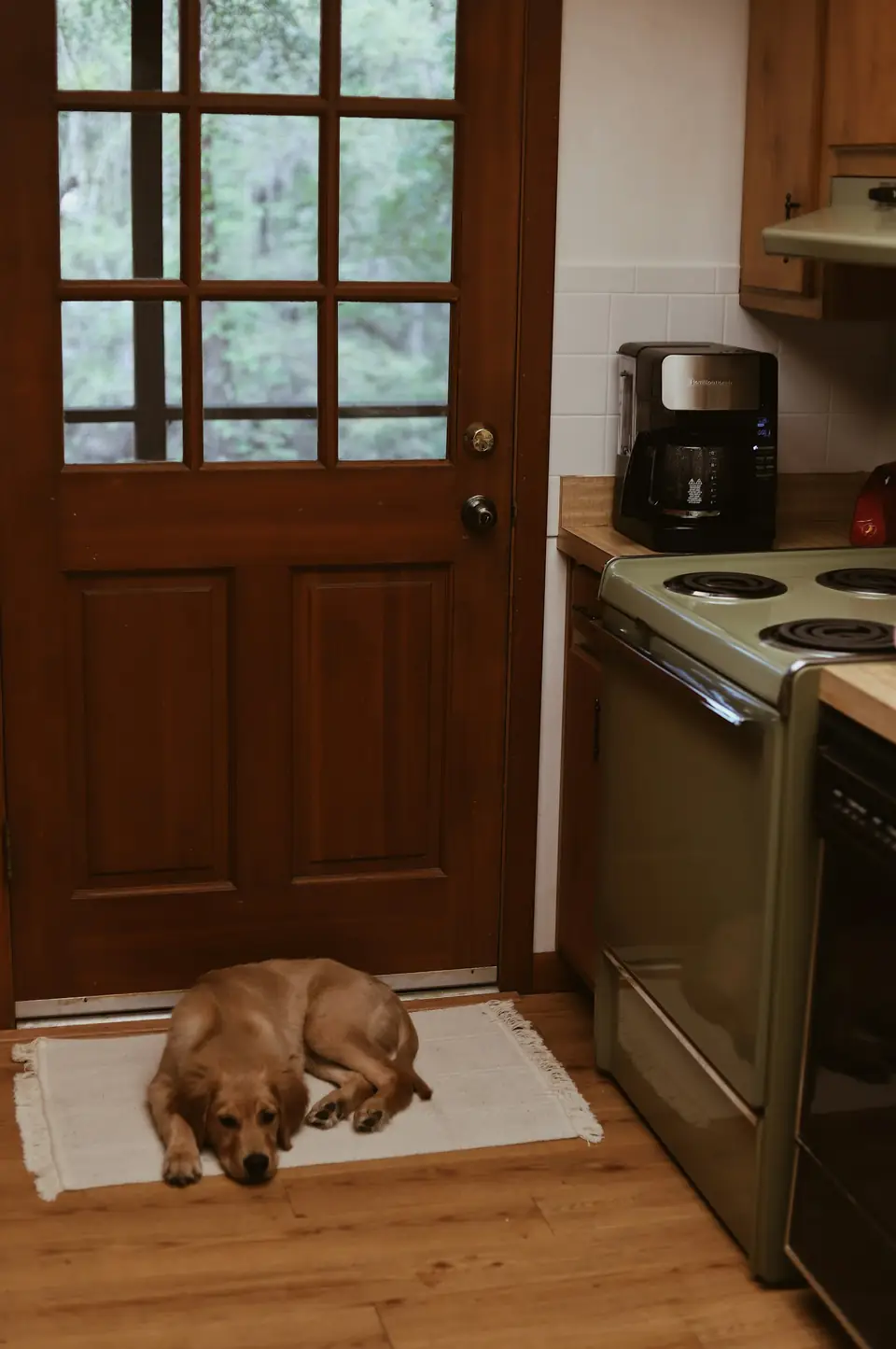
Several states spell this out. Virginia's law says a threat can't be judged by breed or size alone. Maryland's Commission on Civil Rights says landlords can't reject animals with blanket breed or species rules, and Vermont's Human Rights Commission lists breed, size and weight limits among the rules that can't be applied to assistance animals. In New Jersey, the Supreme Court's 2024 decision in Players Place II v. K.P. involved a condominium with a 30 pound limit and a resident's 63 pound emotional support dog; the court held that the request had to be analyzed under the state's Law Against Discrimination, which puts the burden on the association to show the request is unreasonable. West Virginia, by contrast, limits its definition of assistance animal to animals under 150 pounds.
Insurance is the other common explanation. If a landlord says its insurer won't cover your animal, ask to see that in writing. HUD's longstanding guidance on insurance restrictions, which was not among the documents it withdrew in 2025, looks at whether the insurer would actually cancel or change coverage and whether comparable coverage without the restriction is available. Our guide on breed and weight restrictions goes further.
Undue burden, allergies and unusual animals
An undue burden is a real, significant cost or administrative strain, judged against the landlord's resources. It might apply to a small landlord asked to accommodate many animals in a tiny unit, or to an animal that can't safely live in an apartment at all. HUD's 2026 memo pointed to a dismissed complaint involving dozens of animals of different species claimed as emotional support animals.
A neighbor's discomfort usually isn't enough. Illinois says a landlord can't refuse solely because another resident is allergic to or afraid of the animal. Elsewhere, allergies are typically handled by balancing both residents' needs, for example through unit placement or a cleaning plan, rather than by an automatic denial.
Housing the federal law doesn't cover
The Fair Housing Act exempts some small landlords. Under 42 U.S.C. 3603(b), it doesn't cover a single family home rented by an owner who owns no more than three such homes and rents without a broker or discriminatory advertising, or rooms and units in a building with four or fewer units when the owner lives in one of them. Housing run by religious organizations and private clubs has its own limited exemptions.
State law can close those gaps. Connecticut's exemption is narrower, covering only a room in an owner occupied single family home or a unit in an owner occupied two family house, and Vermont's covers owner occupied buildings of three units or fewer. If you rent from a small owner, check your state's rules before assuming you have no protection.
Roommates, sublets and rooms in an owner's home
Shared housing is where federal fair housing law reaches its limits. Three situations come up often, and each one turns on who controls the space your animal would live in.
Renting a room from an owner who lives there
If the owner lives in the building and it has four or fewer units, the 3603(b) exemption above usually applies, and that includes renting a room in a house the owner lives in. The owner can generally turn down your animal without a federal fair housing claim. The exemption doesn't reach discriminatory advertising, which stays covered, and your state's law may still protect you, so check before you assume you have no options.
Choosing roommates, and a roommate who objects
In Fair Housing Council v. Roommate.com (2012), the federal appeals court for the Ninth Circuit held that the Fair Housing Act doesn't apply to the sharing of living units, so it doesn't reach the choice of a roommate. The court read California's fair housing law the same way. The ruling binds federal courts in nine western states, courts elsewhere aren't bound by it, and state or local law can still apply where you live.
In practice, someone choosing a roommate can usually say no to you and your animal. If you already share a lease, it's different: your accommodation request goes to the landlord, who decides about the building's rules. A roommate's objection doesn't settle the request on its own, though the landlord may weigh a real allergy, as described above. A short written agreement with your roommates about feeding, cleaning and shared spaces heads off a lot of friction. Our guide to roommates and shared housing walks through each situation.
Sublets
If you sublet, your animal has to clear two sets of rules: the original tenant's lease with the landlord, and your agreement with that tenant. A sublet agreement usually can't waive the landlord's pet rule, so send your request to the landlord or managing agent as well as to the tenant, and get approval in writing before the animal moves in. The Fair Housing Act protects a person "residing in or intending to reside in" a dwelling, which describes a subtenant, so the landlord's duty to consider the request generally reaches you. If the original tenant still lives in the unit, though, you're sharing a living unit, and the roommate rules come into play.
When the documentation is the problem
A landlord can ask for reliable documentation when your disability or need isn't obvious, and some denials are really about the paperwork. Online registrations, certificates and ID cards don't count, and several states, including Florida, Iowa and Montana, say so in their statutes. Letters without license details, letters from a professional not licensed in your state, and letters issued within days in a state that requires a 30 day relationship are easy targets.
HUD's 2026 memo highlighted a dismissed complaint over three emotional support animals supported by an online form letter. If your denial is about documentation, the fix is usually a better letter rather than a dispute. Our guide on how to get a legitimate ESA letter covers what a strong one includes.
What HUD's 2026 change does and doesn't do
On September 17, 2025, HUD withdrew its 2013 and 2020 notices on assistance animals. On May 22, 2026, its Assistant Secretary for Fair Housing and Equal Opportunity issued a memo permanently rescinding that guidance and directing staff to find reasonable cause only in cases involving animals individually trained to perform disability related work or tasks. In HUD's view, requests for trained animals are presumptively reasonable and requests for untrained ESAs are not.
Here's what the memo doesn't do. It doesn't amend the Fair Housing Act or HUD's accommodation regulation, and courts aren't bound by it; the memo itself says private lawsuits remain available within two years. It doesn't address complaints under Section 504 or the ADA. And it doesn't change state law: California and Maryland have since issued guidance saying emotional support animals stay protected under their state laws, Colorado passed a new assistance animal law, and other state and local fair housing laws still apply. HUD has said it plans formal rulemaking, so this area may change again.
For renters, the practical effect is more scrutiny. Expect some landlords to ask more questions, point to the memo, or deny requests they might have approved a year ago. A calm written reply that cites your state's law, attaches a solid letter and offers reasonable conditions gives you the best chance of reversing those denials, especially in states that protect emotional support animals by statute.
HUD changed which cases it takes. It didn't rewrite the Fair Housing Act.
How much that change matters depends on where you live. The ESA law table shows the 27 states with their own ESA housing statute and the agency to contact in each one.
What to do if your ESA request or letter is denied
A first no is often not the last word. Work through these steps, keeping everything in writing.
- Get the reason in writing. Ask the landlord to state the specific reason for the denial.
- Answer that reason. If it's documentation, provide a proper letter. If it's the animal's behavior, offer records such as a training certificate or references from past landlords. If it's insurance, ask for the insurer's written position.
- Propose a workable alternative. Accommodation requests work best as a back and forth. Offer reasonable conditions, such as a damage agreement or keeping the animal out of certain common areas.
- Check your state's law and agency. State and local agencies apply their own laws, often with different deadlines: New Hampshire allows 180 days, Connecticut and Massachusetts allow 300 days, and many states allow one year.
- Consider a HUD complaint. You can file with HUD within one year. For an untrained ESA, HUD's 2026 memo makes a state agency or a private lawsuit the more realistic route.
- Get legal help before deadlines pass. A local fair housing organization or legal aid office can tell you whether a private lawsuit, which can be filed within two years, makes sense.
Retaliation is a separate violation
The Fair Housing Act separately makes it unlawful to coerce, intimidate, threaten or interfere with anyone for exercising their fair housing rights, which includes asking for an accommodation. If a landlord answers your request with an eviction threat, a sudden rent increase or harassment, write down what happened and when, and keep copies of every message. If trouble starts after your animal is approved, read whether you can be evicted for having an ESA.
Our housing rights page explains how these protections fit together. If you need a letter that will stand up to scrutiny, start with the free assessment.
Ready for your letter? A strong letter answers most denials before they happen, and it starts with the free assessment. Start the free assessment, or read what an ESA letter includes.
Questions people ask
Can a landlord deny an ESA because of its breed?
Generally not on breed alone. A denial for direct threat should rest on the specific animal's actual behavior, such as a bite history. Virginia, Maryland and Vermont say this directly about assistance animals, and New Jersey's Supreme Court applied the state's anti discrimination law to a condominium weight limit in 2024. Insurance restrictions can come into play, but the landlord should be able to show them in writing.
Can a landlord deny my ESA because another tenant is allergic?
Usually not as an automatic answer. Allergies are real and can be disabilities too, so landlords are generally expected to look for a way to meet both needs, such as unit placement or a cleaning plan. Illinois goes further and says a landlord can't refuse an assistance animal solely because another resident is allergic to it or afraid of it.
Is it still worth filing a HUD complaint about an ESA in 2026?
For an untrained emotional support animal, HUD's May 2026 memo says its office will find cause only in cases involving trained animals, so a HUD complaint is unlikely to succeed on its own. A state civil rights agency applying state law, a local fair housing organization, or a private lawsuit under the Fair Housing Act filed within two years is usually the stronger option.
Can a landlord with a small building refuse an ESA?
Possibly. The Fair Housing Act exempts owner occupied buildings with four or fewer units and some single family homes rented by owners of no more than three, without a broker. But state laws often cover more housing. Connecticut and Vermont, for example, have narrower exemptions, so a small landlord who is exempt from federal law may still have duties under state law.
Can my roommate refuse my emotional support animal?
If someone is choosing a roommate, generally yes under federal law. The Ninth Circuit held in 2012 that the Fair Housing Act doesn't apply to shared living units, and owner occupied buildings with four or fewer units are exempt as well. If you already share a lease, your request goes to the landlord, and a roommate's objection doesn't decide it on its own. State or local law can still apply, so check your state's rules.
My ESA letter was rejected. What should I do?
Ask for the reason in writing, then answer that reason. A rejection over documentation usually means you need a better letter from a professional licensed in your state, with full license details a landlord can check. A denial about the animal needs records such as vaccinations or references, and a claim that the housing is exempt means checking your state's law. Keep everything in writing and don't move the animal in while it's open.
This guide is general information, not legal or medical advice. Rules change and vary by state.
More on this topic: landlords, leases and fees
All guides on this topic- Can you have an emotional support animal in a no pets apartment?
- How to write a reasonable accommodation request letter for your ESA, with a sample
- ESA form for landlord requests
- Can a landlord verify an ESA letter?
- Can a landlord ask about your disability when you request an ESA?
- Pet screening platforms and your ESA letter
- How to add your ESA letter to PetScreening
- ESA pet fees and deposits by state
- Can you have more than one emotional support animal?
- Renters insurance and your emotional support animal
- Can you be evicted for having an emotional support animal?
- What to do if your ESA request is denied, and how to file a fair housing complaint
- ESA rules for landlords and property managers in 2026
- Moving with an emotional support animal
- Your building was sold